Escalators, ER Visits, Airplanes, and Heartfelt Gratitude
It has been a hectic few days to say the least. On Monday, my son Max told me it was the worst day of his life and he was certainly correct (and we hope he doesn’t have a worse one anytime soon). But, it is in the midst of difficulty that you gain an appreciation for true nature of humanity.
Here is a run-down on what happened (Note: If you don’t want to read all the details, please skip down to the end – that is the most important part):
Max and I were in the US for a couple weeks (work for me, visiting grandparents for him). We were schedule to leave on Monday. We had to return the rental car to Louisville airport and then fly to Chicago to catch our flight back to Swaziland. Even though our children are phenomenal travelers, the logistics of travel can be a bit much.
We were already a bit under pressure because I had miscalculated the time zone changes, but we were going to catch our plane no problem. After dropping the rental car off, we loaded up our luggage. Max had his little backpack and I was pulling two 50-pound suitcases as well as a heavy backpack and my laptop bag. He followed me up the escalator to the ticket counter. About halfway up, one of the bags which had a strap wrapped around my wrist slipped down a step and pulled me off balance. Between not having any free hands, and the heavy backpack, I tumbled over backwards with me and bags landing on Max. Someone hit the emergency stop on the escalator and several people rushed to help. Max was crying and scared and that is when I noticed a deep gash on his foot.
I sprinted up the stopped escalator with him and was quickly joined by police and the EMS. There was a good bit of blood and it was obvious the gash was more than superficial. While Max was obviously in pain, he quickly gathered himself and let the police tend to his wound. One of the officers brought him a stuffed animal to distract him while the others focused on providing first aid.
At this point the reality of the situation started to set in. We were 9,000 miles away from home and were obviously going to miss our flight and our connecting flight (and then bus to Swaziland). We were going to have to get medical treatment somewhere and I had an injured son, nearly 200 pounds of luggage, and no transportation.
The police offered to watch my stuff while I carried Max to try and figure out the details. First we went to the ticket counter and canceled our flight. Then I went back to the Hertz rental car to see if there was any way I could get my rental car back. I could have ubered to the hospital (the police wanted me to take an ambulance), but that presented crazy logistics with luggage. I told the people at Hertz what happened and they immediately got on the phone and pulled the car I had used back out for me and even delivered it to the door. (More on Hertz later). From there I headed to the nearest hospital.
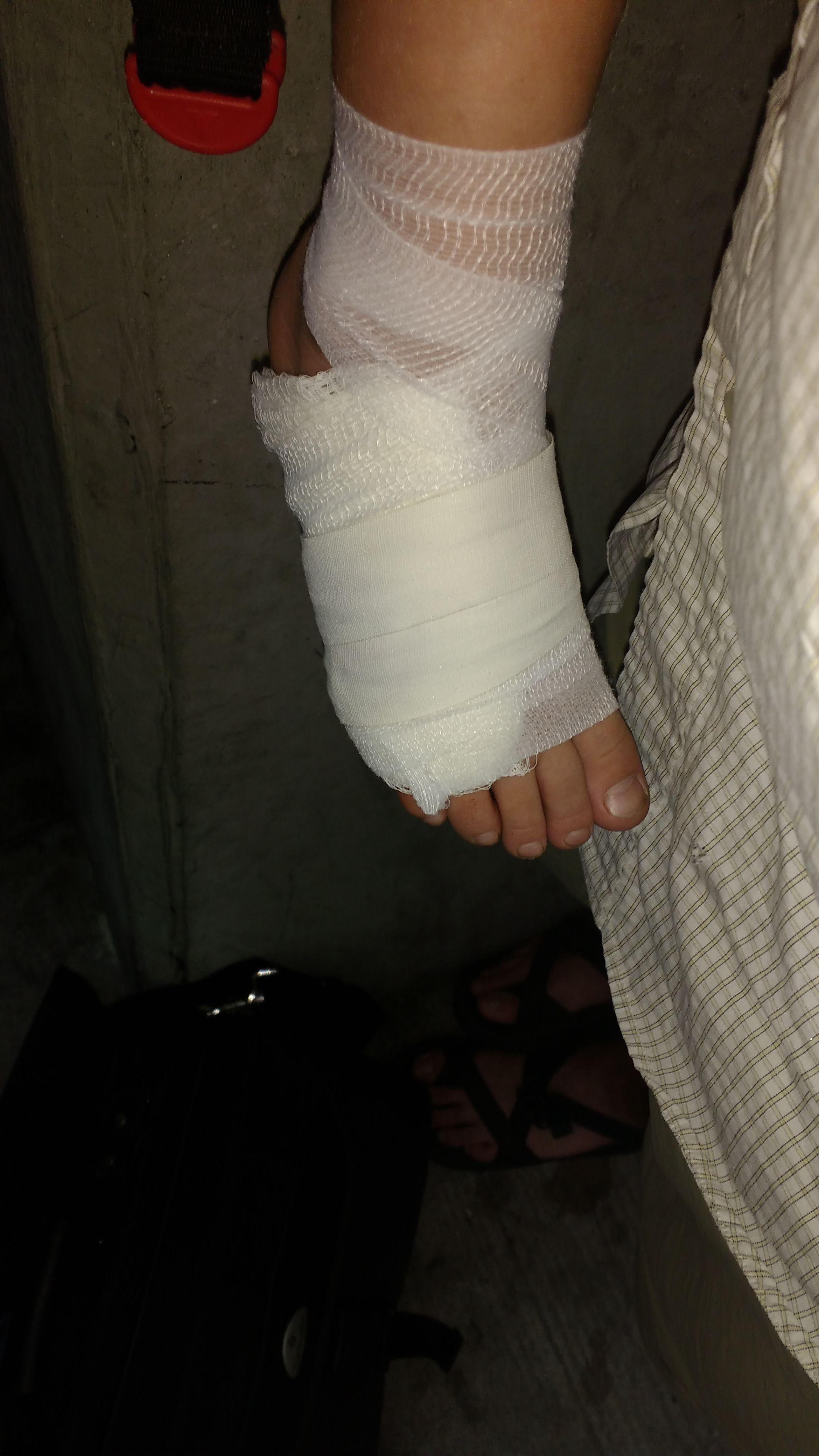
The next several hours moved very slow compared to the chaos at the airport. We checked in the hospital and were triaged. At this point, Max is calm and we are just waiting for our turn to go back. This relative downtime gave me a chance to think a bit more about logistics. In particular the fact that our international health insurance doesn’t cover the United States. I had no idea how much this trip to the ER was going to cost us. The time in the waiting room also gave me a chance to make some phone calls. Obviously I was updating Beth and the family in the states. Beth took care of rearranging all my transport and everyone else reached out to offer help however they could. I called Hertz back and talked to a manager who was incredibly sympathetic to our situation and told us it would be no problem to extend the contract for a day and that we could even return the car to O’hare in Chicago since our plane tickets would cost nearly $500 to rebook. I asked how much it would cost and he said “not too much more, I wouldn’t worry about it.”
At this time I also got in touch with my cousin Jana who lives in Louisville, has traveled extensively internationally, and who is a physical therapist specializing on hands and feet. We talked about our options and she suggested an urgent care would be cheaper and most likely quicker. She set out to call around to see what was available while also arranging for us to stay at her place. She found an urgent care with no waiting near her house that was going to cost $250 to get Max stitched up. At this point, Max was completely calm and relatively little pain. I asked triage nurse an estimate on time (I am sure she hates that question), and was told “when you checked in there was one person in the queue ahead of us and nothing has changed.” That made it easy to decide to head out of there and go to urgent care.
At Urgent care we quickly got taken back to a room and the nurse was very attentive to Max and his needs. The Physician’s Assistant on call came in to take a look at things. Both medical staff let us know from the very beginning that there was a chance they couldn’t treat Max due to his age and the location of his injury could have caused nerve, tendon or vascular damage. At this point it had been about 4 hours since the accident and when they took the bandage off it was still bleeding.
The PA was incredibly gracious when reviewing our options. He recommended we go to the children’s hospital (there was a branch close by), but also understood our situation with insurance and travel. Basically he told us that he could probably stitch it up, but that really an expert should look at it. At this point, I called Jana to ask if she could come over to help me think through our options. There was some concern because Max was not moving his toes very well. We agreed to put some topical painkiller on it and see what should be done next. During this time, he also called around to see our alternate medical options.
The longer we were at urgent care the more obvious it was that we would be heading back to the Emergency Room for treatment. The PA came back in the office and said that his attending physician had told him he couldn’t do the stitches due to the complexity. Additionally, in calling the nearby children’s hospital branch, he learned that even they wouldn’t accept the case because Max needed a place where a pediatric orthopedic surgeon could consult. Due to the location and depth of the injury there was a possibility of tendon, nerve or even vascular damage. Our only option was to go to the main branch of the Kosair children’s hospital.
It was obvious that the PA was going above and beyond to help us. In additional to his medical care, and the time he took to consult with doctor’s across the city, he told us he would work it out so that the entire visit to urgent care would be free. Holy Cow… what a relief!
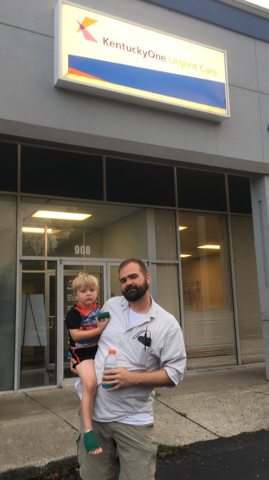
So off to Kosair we headed. Jana called ahead to her friends in the medical community to get advice and information and I followed her to the hospital.
We checked in, were triaged, and found our place in the waiting room. Interestingly enough, a family friend from my hometown was sitting in the waiting area as well. Throughout all of this Max was a trooper. At this point it was past his bed time and despite his injury, he was incredibly calm and patient. His biggest complaint was that he couldn’t eat or drink due to the possibility that he would need anesthesia if surgery was required.
After a couple hours we were taken back to a room. The resident doctor took a look at Max and did some initial cleaning of the wound. He confirmed that tendon damage could be a concern, but they wouldn’t know until they could look at it further. The attending doctor also came and checked the situation and called for an X-Ray, so I carried Max off to radiology for three pictures of his bones. The initial report looked clear, but the radiologist came back to say he saw a hairline fracture.
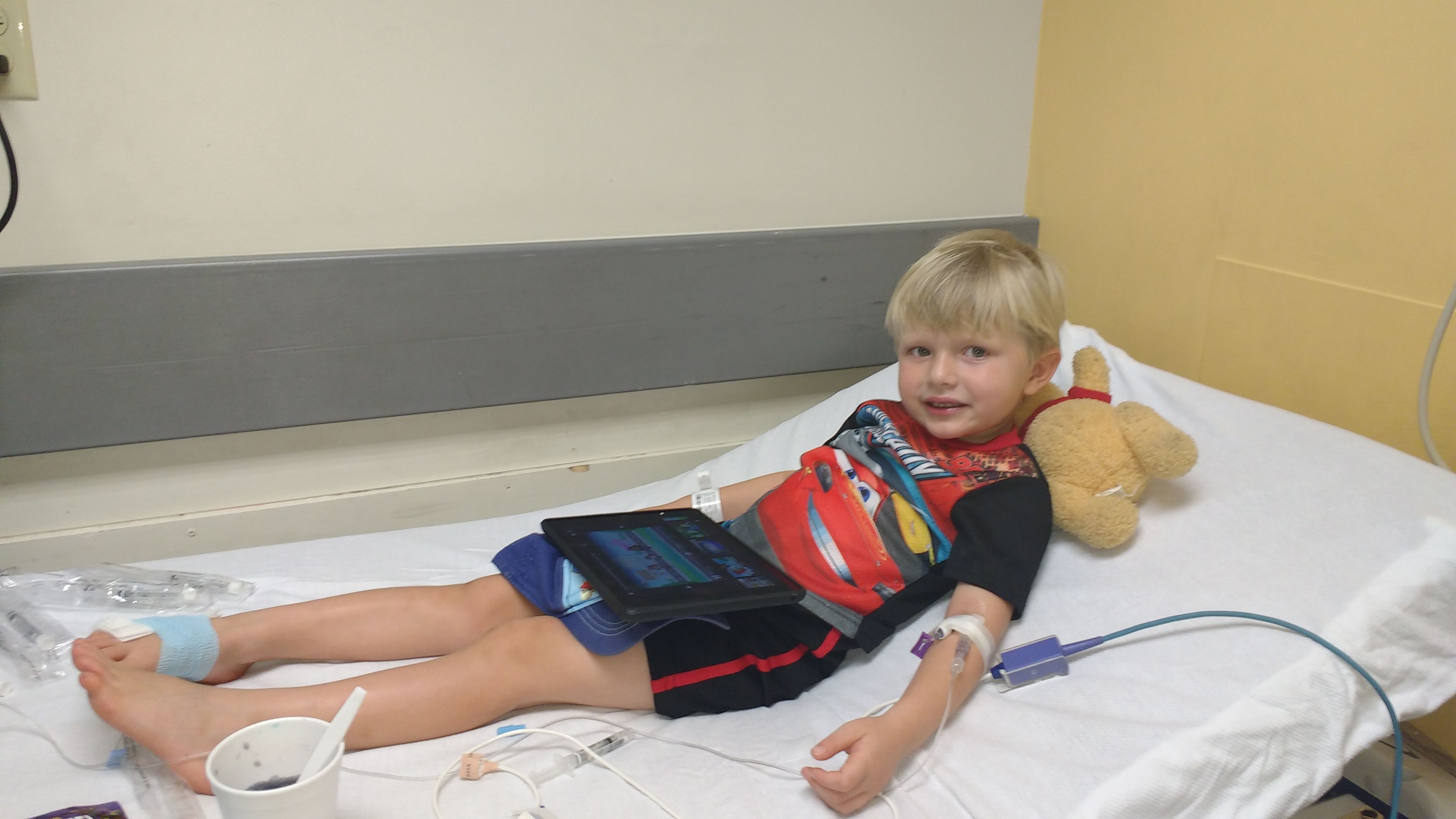
Now it was time for the tough part – exploring the wound and stitches. Max was given a nasal dose of medicine to reduce the pain, but it didn’t seem to help much because even the cleaning process caused him deep distress. With the attending and resident doctor both looking at things, they told us that tendon damage didn’t seem to be an issue and there also wasn’t any obvious nerve damage. Next step then was actually getting the stitches. Despite the topical pain killer already applied and the nasal painkiller, Max did not react well to the numbing injections. This was certainly the most traumatic part of the process for him. Eventually, the doctor was able to start sewing. Even though Max was crying through the whole process, he never flinched his foot and let the doctor do his job. In the end, it only took 3 stitches to get him put back together.
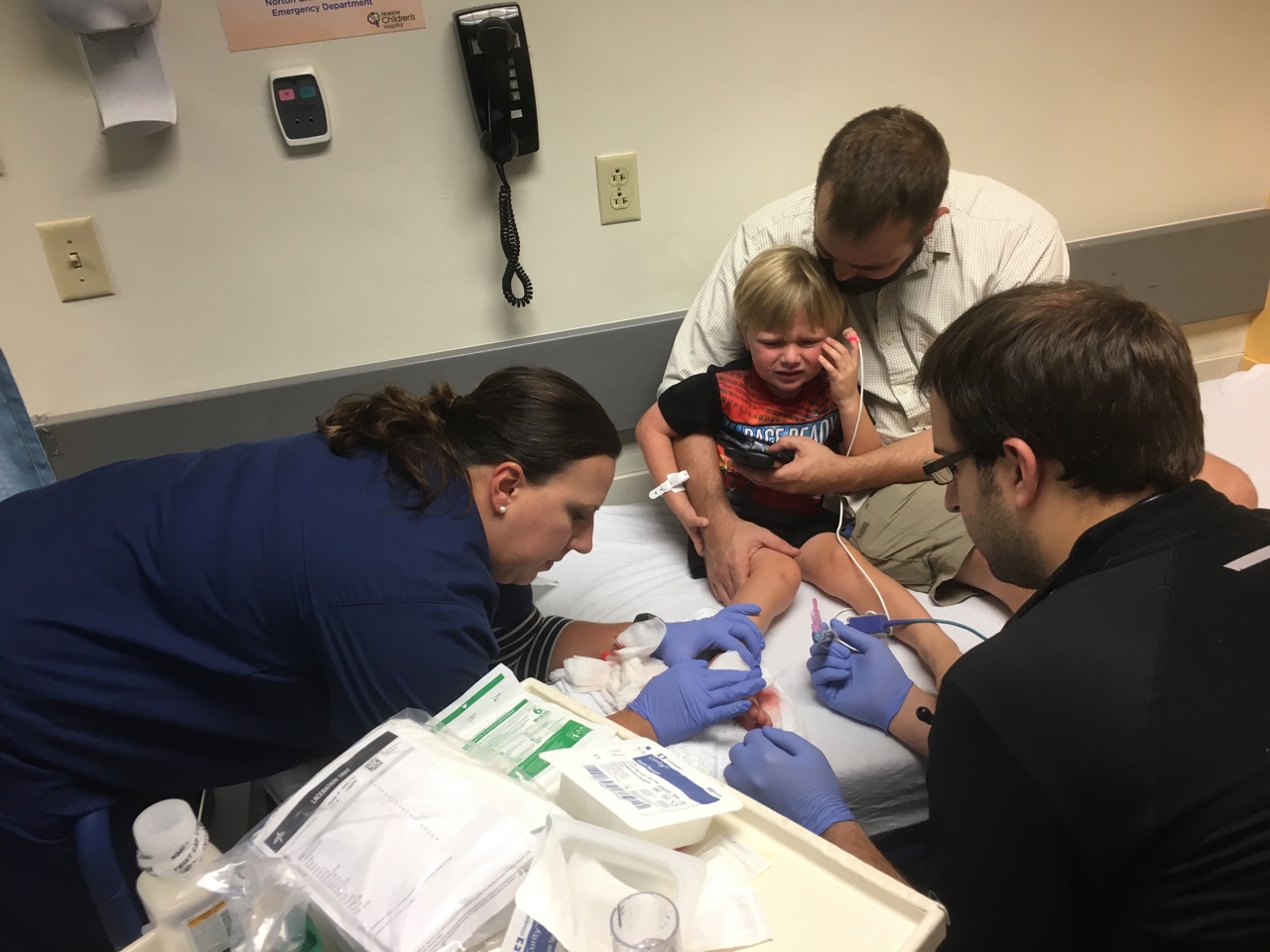
At this point it must have been about midnight and Jana headed back home while we wrapped things up. The doctor told us that because there was a minor fracture and an open wound, it was technically a compound fracture and we would need IV then oral anti-biotics. I already knew Max was not going to be a fan of more needles.
As you could imagine, Max was exhausted and fell asleep in my arms. The nurse came in to give the IV and he was so sleepy, I couldn’t even rouse him. The nurse found a vein in his hand and applied an aerosol pain killer and then inserted the IV. Thankfully Max didn’t wake up during the procedure, but unfortunately the vein the nurse was going for blew. He then found a vein in his arm, but Max woke up for the second stick and was none too happy. Once again the vein blew and we would have to try again. A different nurse came in and despite Max’s protests, successfully put the IV in. It was hooked up to some antibiotics and we began the waiting process. After about an hour the IV was removed and we were presented with our discharge papers.
After taking care of the paperwork, we finally head over to Jana’s house to get some rest. When we got there, it was about 2am – 12 hours after the accident had initially occurred.

The next morning we were able to sleep in a bit and also take care of the logistics like repacking and getting Max his prescription. At around 1pm after some lunch, we began the drive to Chicago to drop off the rental car and catch our flight. Thankfully the drive was pleasantly uneventful, but it did give me a chance to think about the logistics of actually getting from the car to airplane. Somehow, I was going to have to carry two backpacks, two 50 pound suitcases, a bulky duffel bag and an injured 4-year old. No problem! Thankfully my parents called ahead to try and work out the details, but unfortunately there wasn’t a clear solution and I was going to have to wing it.
Upon arriving at the Hertz return office, I ran into what seemed like a problem. The guy checking in the cars said he couldn’t do anything because the contract had been closed. Essentially I was driving a car without a formal agreement from the rental company. He told me I had to go downstairs to talk with the office. That is when I realized the only way down was by escalator. You have got to be kidding me!
At the counter I talked to one advisor who said there was nothing he could do and I was going to have to work things out through Louisville AND the national Hertz office. I had gotten to the airport more than 3 hours early, but didn’t really want to spend time negotiating contracts. I was then directed to another representative who looked more into my situation. After punching a few keys he outlined the situation: Essentially the Louisville manager had kept my contract closed rather than extending it. While that initially looked like a problem, what it really meant was that the guy had loaned me the car, and arranged for the drop off in Chicago, all on his own. It seems there weren’t going to be any additional charges for our big change of plans. WOW!
At this point I went back up the escalator and began dreading the next challenge: getting all my stuff, with an injured kid, down the escalator, to the bus, and up to the ticket counter. Quietly this was the part of the whole ordeal I had been dreading the most. As I was loading up my bags and thinking about options such as throwing my bags down the escalator and then dealing with them later, the car attendant offered to go get me a luggage trolley. Excellent! Why hadn’t I thought to ask for that! Oh, and he mentioned there was an elevator I could take! First complexity handled!
Next came the bus. Thankfully the bus was already waiting for us when we got to the ground floor to take us to the terminal. I was able to carry Max and get the first bag on the bus. But then, the bus driver quickly got up and grabbed my other bags to help load up. No problem at all! Once on the bus, it was just a matter of waiting. Once we got to the terminal, before I could stand up with Max, the driver was back there to help me unload. I set Max down, grabbed a trolley and loaded up our stuff. From there I headed into the terminal, found a quiet place, and repacked our bags for the journey home.
After we made it to the ticket counter, the complexity of our travel was greatly reduced. We checked in, dropped our bags, and Emirates arranged for us to have a wheel chair to get through security. Despite some juggling required to get through the scanners, it all was a pleasantly uneventful process.
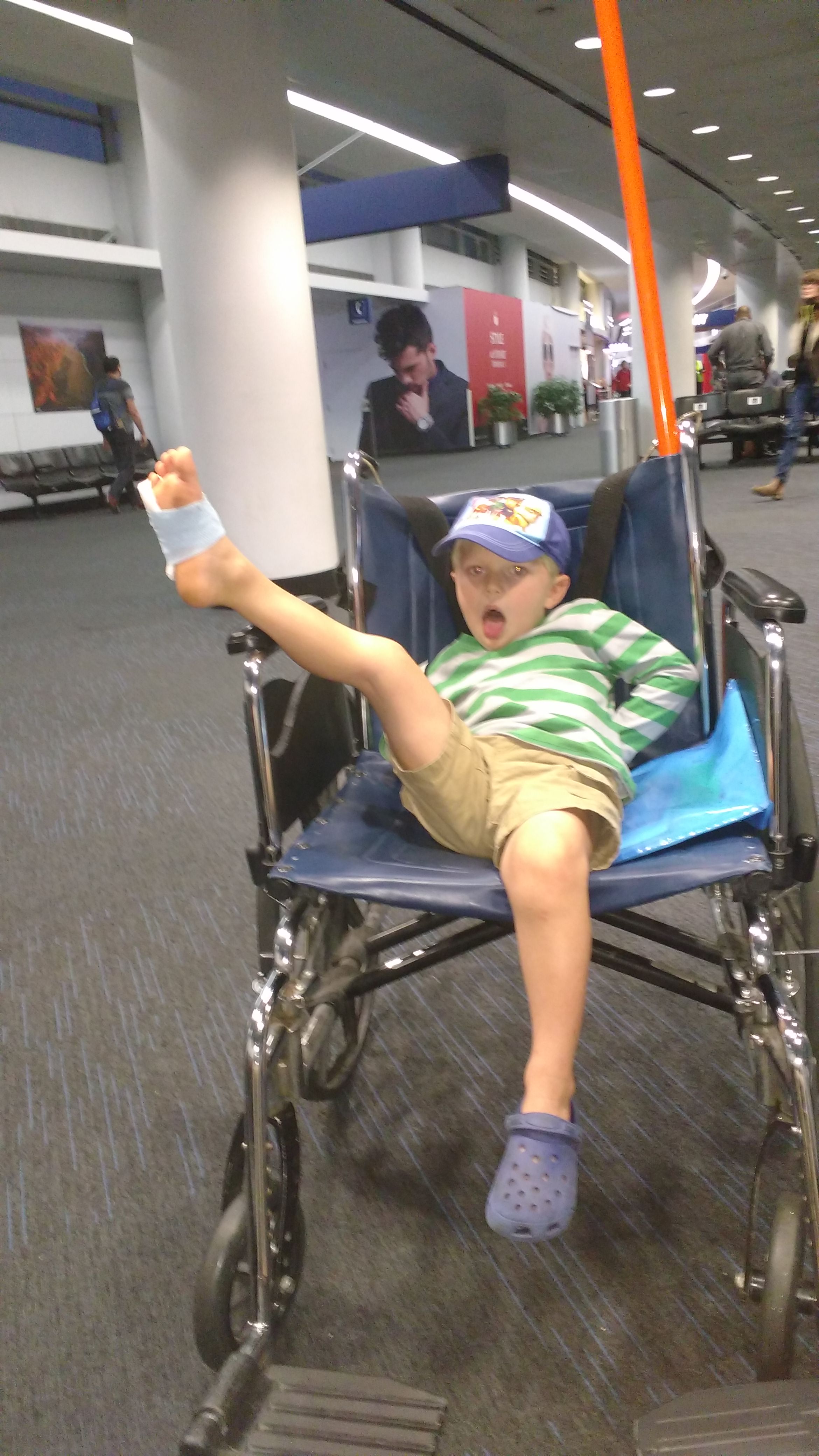
On the first flight from Chicago to Dubai (14 hours), we ended up with an aisle/middle seat combo with an empty seat between us and then another guy on the other aisle. Beth had called ahead and told them of our situation and Emirates agreed to flag our seats to try their best to keep things open. It turns out that there were actually a couple empty seats available and the guy in our row willing to move so we ended up with a whole role of 4 seats to ourselves. That meant that Max could fully lay down to sleep! What a relief!
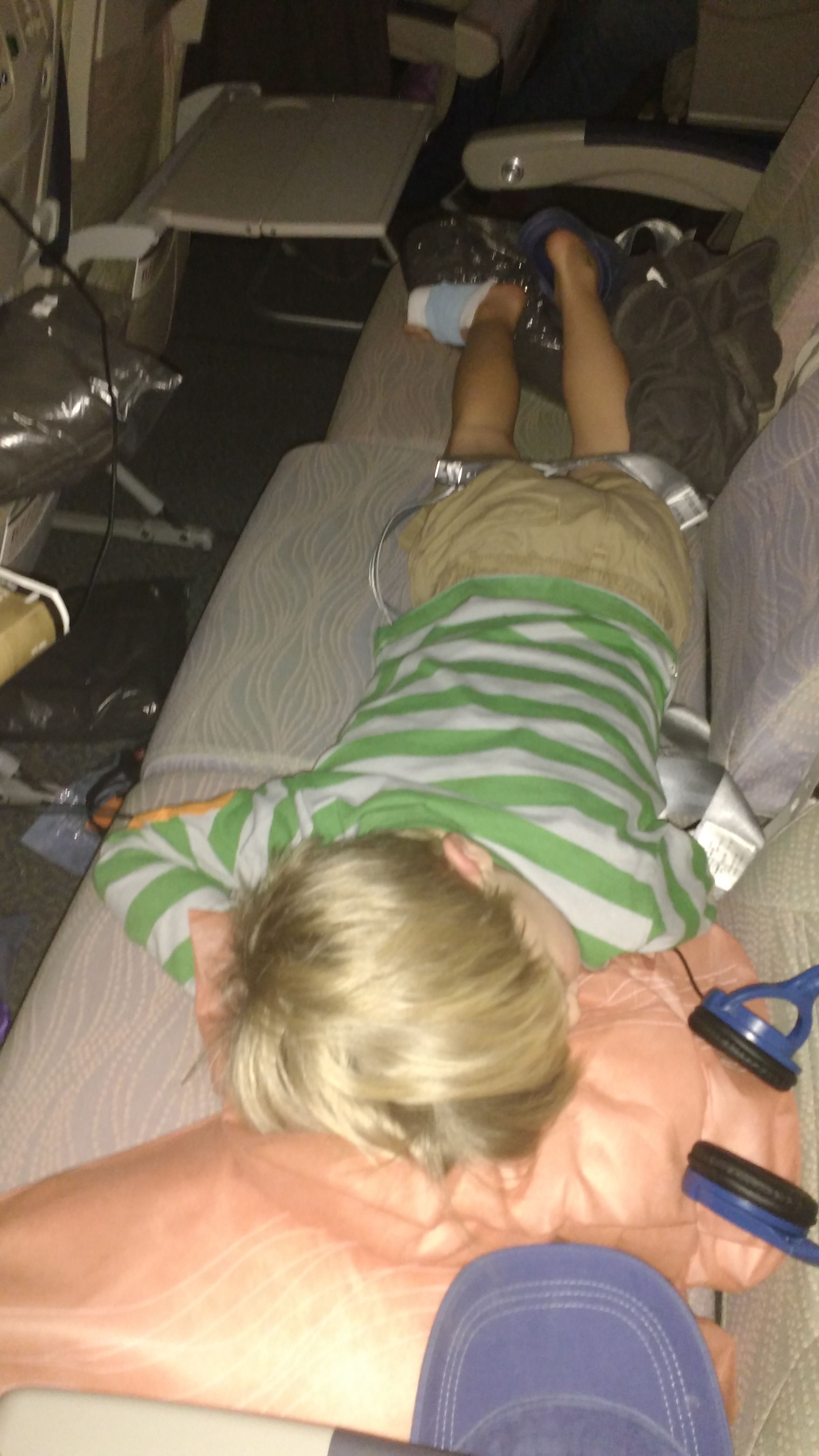
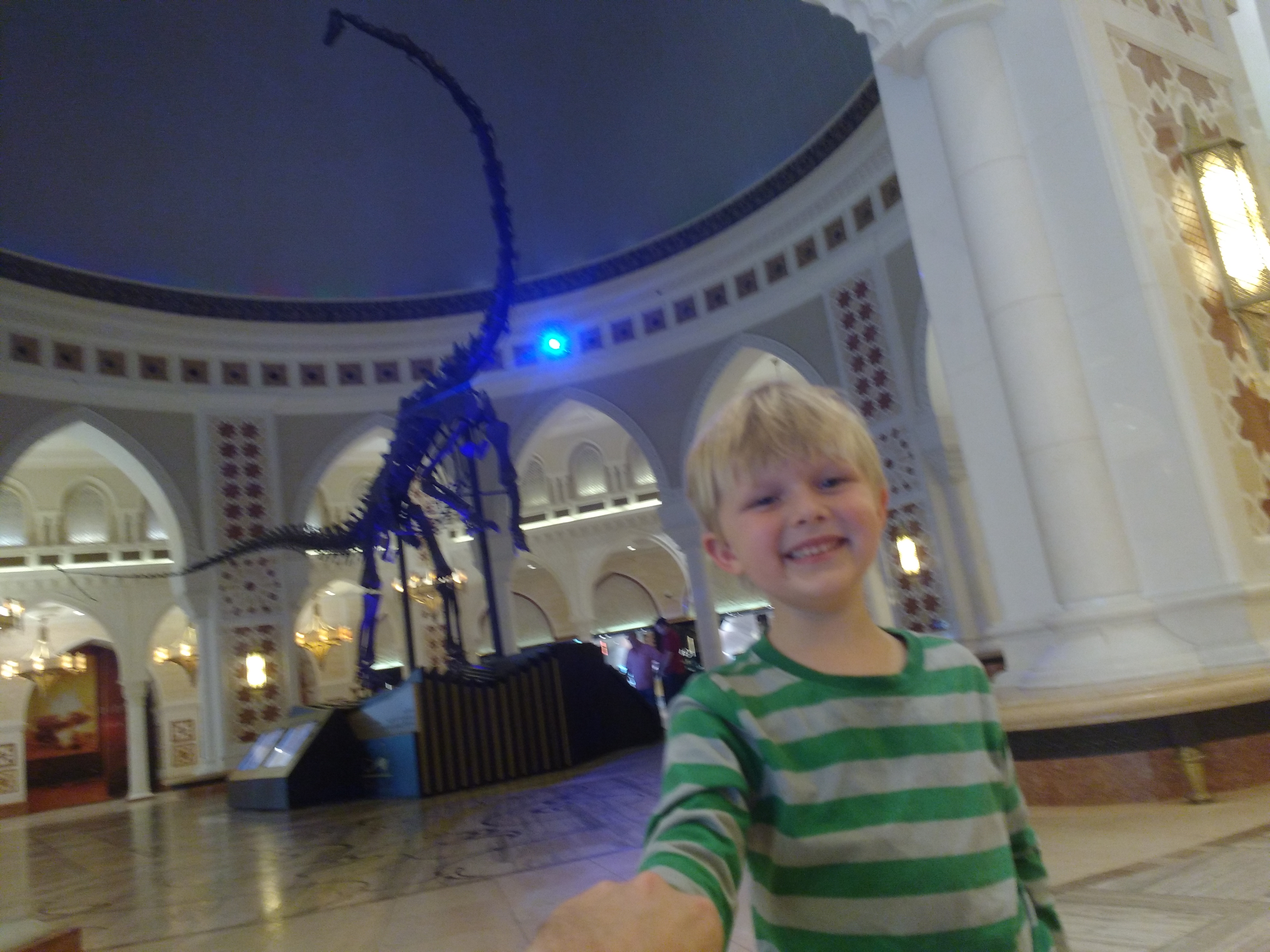
Our original plan was to spend a long layover in Dubai doing things in the city. One of the only non-injury-related things that Max cried about was the fact that he wasn’t going to get to see the dinosaur skeleton at the Dubai Mall. While on the plane, I was chatting with Beth (inflight internet is amazing!) and we realized that since our flight was ahead of schedule, if everything worked out, there was going to be enough time to still make it into the city. I did all my calculations and set alarms on my phone so that we could try our best to give Max some distraction during the downtime.
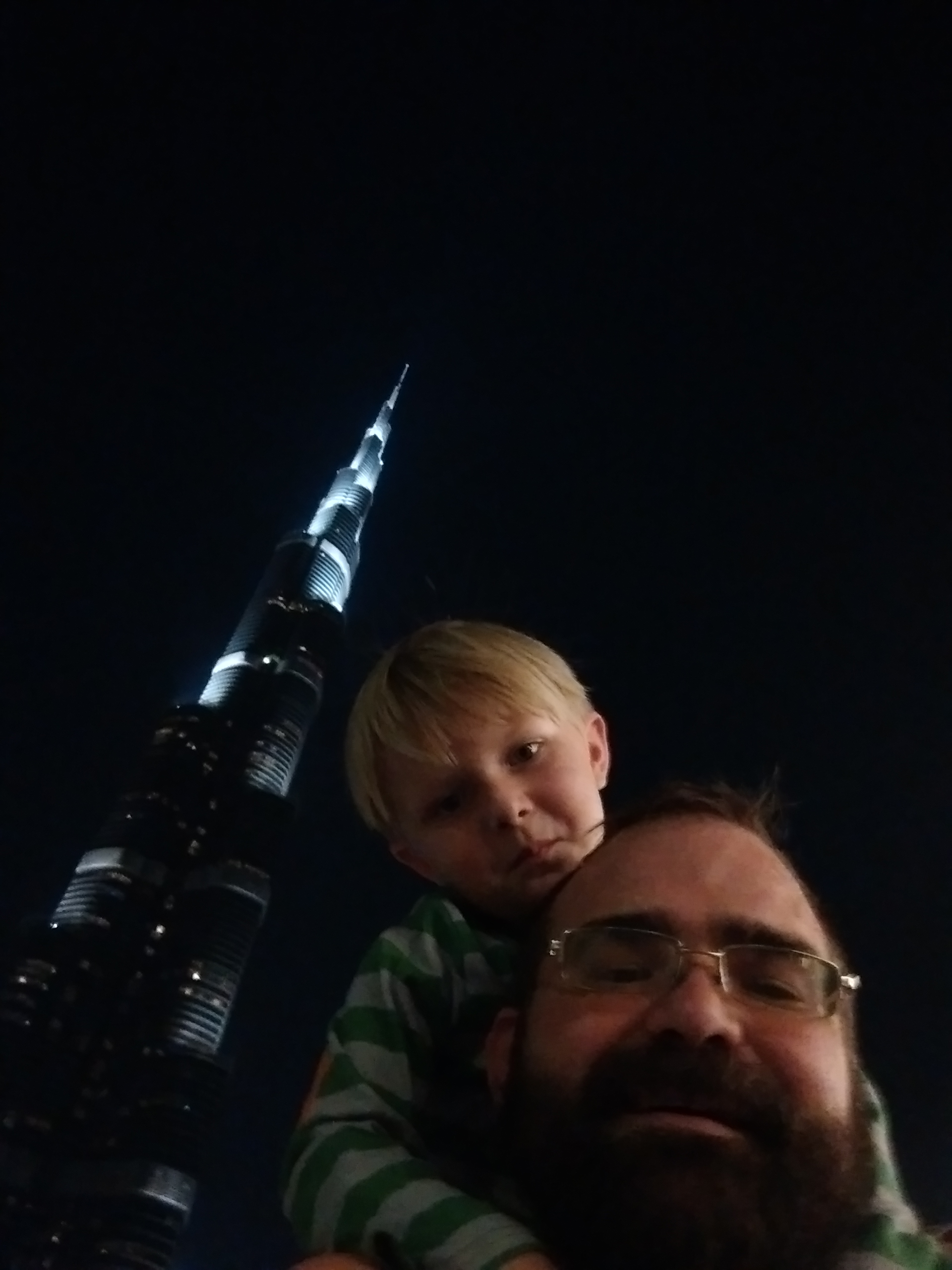
At Dubai, things went flawlessly. We were through security and in the cab even before we were originally scheduled to land. With Max on my shoulders, we were able to quickly see all the things I had promised him (dinosaur skeleton, water show, tallest building in the world, aquarium, and the biggest candy store in the world). We caught a cab back, and were able to get quickly through security with enough time to take advantage of the lounge (having frequent flyer status is such a blessing) to get a quick bite to eat and more importantly a shower.
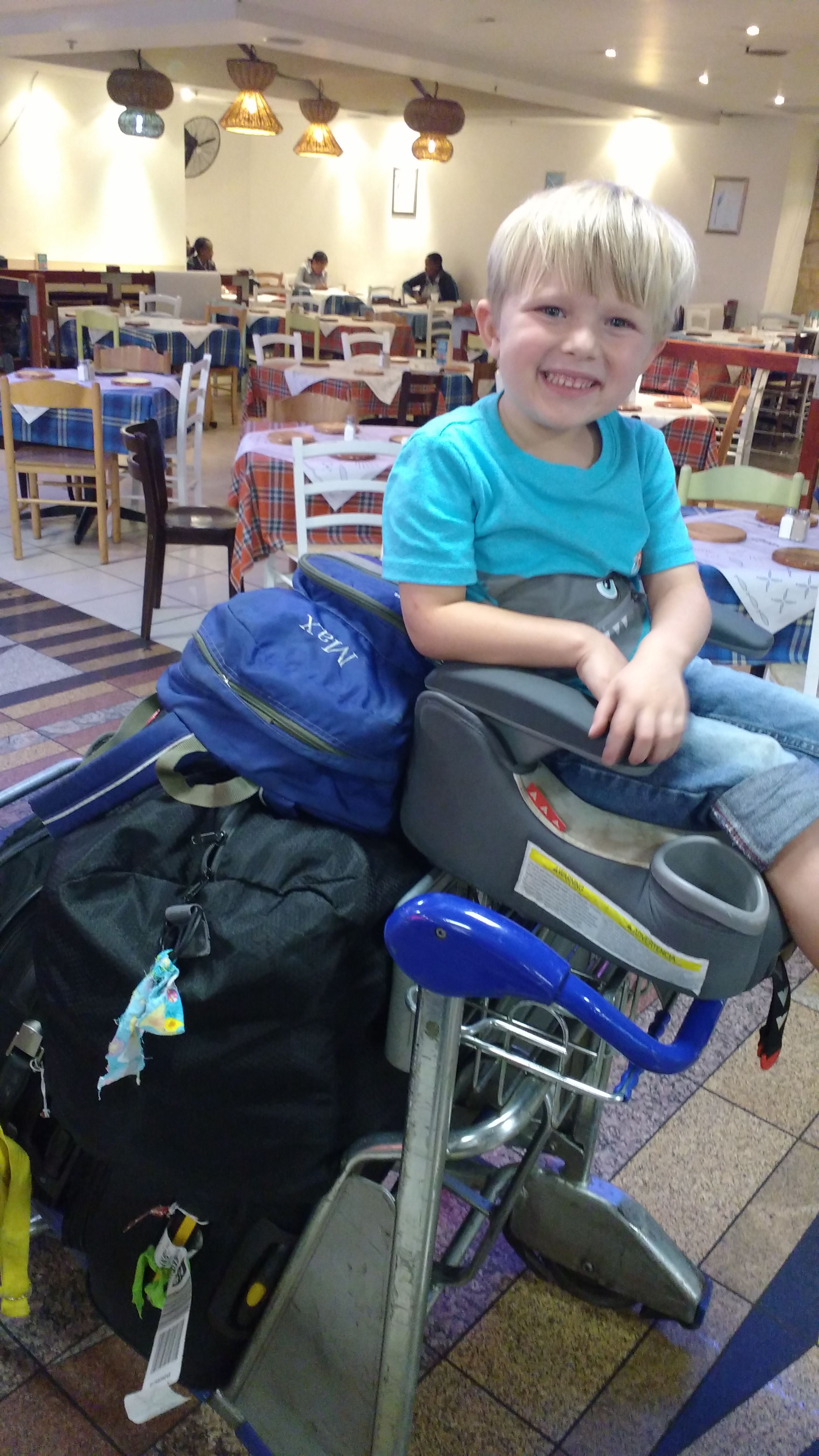
Our next flight went just as well as the first. We had an open seat next to us despite it being an almost full flight. The people around us were very friendly and Max once again traveled like a champ. When we got to the Johannesburg airport, we got our luggage and a trolley and had some time to grab a bite to eat (who doesn’t like calamari for breakfast!). We caught our shuttle back to Swaziland, which thankfully had a lot of empty seats. We both got some sleep on the ride home and were met by a staff member who had us home by afternoon with enough time to decompress and get cleaned up.
We started our journey on Monday morning and by Thursday evening we were safely back home – exhausted and a bit frazzled, but overall in great shape all things considered.
Looking back on the situation, I realize just how fortunate we were and how thankful I am for all the strangers and family/friends who helped make a chaotic situation so much more bearable.
So now for the main reason I am writing this post:
All the people I want to give thanks to:
- To the staff and bystanders at the Louisville airport who quickly responded, pressed the emergency stop on the escalator and attended to Max and I before I could even comprehend what was happening.
- To the police and EMS of the Louisville PD who provided immediate and competent care. They were primarily concerned about our wellbeing, but also understanding of our situation with the lack of insurance and the need to get home. In all at least 4 people gave their time and attention to our situation providing excellent first aid and evaluation as well as emotional support.
- I don’t know the name of the main police officer who helped us, but he was absolutely incredible. He watched our stuff while I sorted out the logistics. He carried our luggage to the curb. He even came back to ensure we not only got his foot checked out, but also kept an eye out of head trauma. Most of all, he made sure we got the care we needed without incurring unnecessary costs or taking unnecessary risks.
- To the Hertz people at the Louisville airport. I simply cannot say enough about how compassionate and helpful they were. The people at the desk ensured I had transportation even though I had already closed my contract. They could have easily told me to just take an Uber or made me fill out paperwork for another car. They were primarily concerned about Max’s wellbeing instead of processes and procedures. The fact that they even arranged the car to pick us up at the curb shows their level of detail. When I called to sort out the paperwork, they were more concerned about us than about the rental details. At this point it seems they even comped us our extension and are working out the details on their side. Above and beyond!
- To the random guy waiting in the hospital ER who offered Max and I a gift card for dinner after overhearing our ordeal.
- To Beth who did an amazing job at handling her son being hurt 9,000 miles away. She handled all the details of changing our flights and ensuring we had open seats around. But more importantly, she stayed calm and was there to help where she could without panicking.
- To my cousin Jana who completely dropped everything to help us and give us a place to stay. She helped us think through our options and the implications. She made countless phone calls to friends in the medical community to explore our options and get recommendations. Her expertise in PT helped us get straight answers and understand the risks. She spent more than 7 hours physically with us to help with the details and logistics of moving between medical centers and ensuring everyone was comfortable. The next day she helped research pharmacies and other optios. Also thanks to Curtis and Knox for letting us crash on their couch and disrupt their lives for a couple days. We were so fortunate to have friends and family in the city where this happened.
- To the staff at the Urgent care, especially the nurse (don’t remember her name) and to Travis the PA. They expertly balanced the concerns about travel and insurance with what was in the best interests of Max. Travis in particular fully commited himself to looking into all the options and ensuring we had a clear path forward. The fact that our medical services were provided free of charge is absolutely amazing and goes a long way in helping us process through the secondary struggles of this ordeal (financial). What a compassionate and commited staff – especially at the end of the day on a bank holiday).
- To all the staff at Kosair hospital for providing calm, professional, and expert service. In particular to:
- The billing lady for understanding that financial issues can provide additional strain to already hectic situations.
- Grant for always being straightforward with us and taking the time to talk with Max when he was scared. He did his absolute best to ensure Max got the care he needed and minimized the trauma.
- Star for giving her attention fully to Max even during a very busy night.
- The radiology staff for focusing so much on Max and making sure he was comfortable and the experience was as simple as possible.
- The intern(?) who came to Max with an iPad so he would be calm during the IVs and even left it with him so he could watch during his treatment.
- The nurses who took care of all the details and did their absolute best to make sure Max was comfortable. Even bringing a slushee after his IV stick. The late night nurse also make sure that we were informed not only about post-discharge care, but also our options for payment reduction.
- To the billing department for working with us on the finances and also explaining the situation in details when I asked specific questions.
- To all my family to checked in with us and offered to help. In particular to my parents who helped to arrange the details around our transition at the Chicago airport, even being willing to fly back with us if we needed them. Even extended family reached out to check on us and offer any help we could use.
- To the Walgreens pharmacist for working with us to reduce medication costs and “Adjusting” procedures so that I could get a partial prescription in the states and then get the rest in Swaziland where it is cheaper.
- To the random country lady at McDonalds who saw Max’s foot and offered to get him extra chicken nuggets if he wanted them.
- Again, a shout out to the Hertz people. In Chicago the check in guy ensured I had a cart and access to a trolley. The associates at the desk helped me figure out the logistics of the rental. The bus driver went out of his way to help with the bags. Spectacular service at one of the complicated legs of the journey.
- To the Emirates and O’Hare staff for arranging for a wheelchair and helping through immigration and security.
- To the guy on the plane to Dubai who moved seats so max could have a whole row to lay down on
- To the flight staff on all our flights for going out of their way to ensure Max was taken care of (and that I was able to rest when possible).
- To the random Arab guy on the escalator in the Dubai Mall who talked to Max and told him it was going to be okay when Max was hesitant to take an escalator.
- To the receptionist at the Emirates lounge who let Max in even though my status did not allow guests. She also went and got us a stroller so we could move around easier with Max.
- To all the security officers at all airports who didn’t hassle me for taking a bunch of liquid (medicine for Max) through the screening areas.
- To all the friends and family who reached out with genuine offers to help however they could and to make sure we were taken care of.
- To all the medical experts who gave their input and advice through friends to help us process our situation.
- And finally to Max for being so brave and strong during this ordeal. He went through so much and was an absolute trooper through it all. Getting hurt would overwhelmed many kids, but he not only handled that, but also spend the next 2.5 days on a crazy travel schedule and never once complained about anything besides the taste of his antibiotic.
Our trip back certainly did not go as planned, but it could have been much worse. When I think about it, I realize just how fortunate / lucky we were. My 4 year old son had over 350 pounds fall on him on a moving metal escalator and he escaped with only 3 stitches. While the logistics and challenges of having all this happen so far from home were a bit overwhelming, the kindness and generosity of friends, family and strangers made things so much better. I am so grateful for all the ways people reached out to help – some in small ways, some in large ways, but all where meaningful.
And just so you know, Max and I are now safely back home in Swaziland. He is on the mend and most concerned about not being able to go to school yet.
This event will change my thinking on many things, but for now, all I can think is how grateful I am for the generosity of those around me. I only hope I can return the favor to those I find myself around in their times of need.







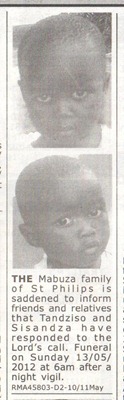 I simply don’t have the words to express the amount of sadness and grief that instantly swept through the entire area. The mother, Nakiwe, was one of our brightest employees before she took a new job to be closer to her husband in Manzini. The father, Felix, is a police officer, but has worked with Cabrini in the education for years and years, he was apart of life on the mission even before the current sisters were. The grandfather was one of the major leaders in the church and in his chiefdom. Probably a quarter of our staff live within a couple kilometers of where the boys drowned.
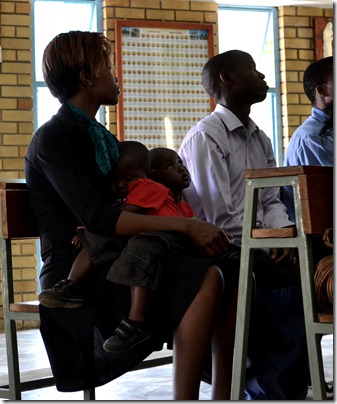 [Nakiwe, Sisandza,Tandziso and Felix Mabuza at the Feast of St. Philips]